Navratri 2026: Dates, 9 Days, Colours, Puja and Garba Guide
Sharad Navratri is one of India's most widely observed Hindu festivals, bringing together religious worship, fasting, cultural traditions and community celebrations.
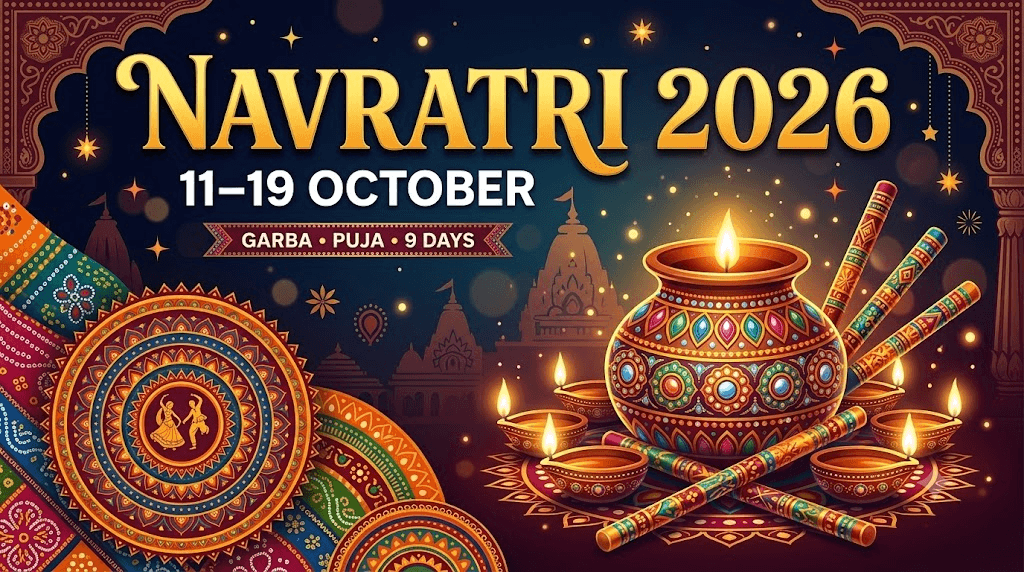
In 2026, Sharad Navratri will begin on Sunday, October 11, and the nine-day observance will continue through Monday, October 19. Vijayadashami or Dussehra will be celebrated on Tuesday, October 20 in most parts of India. Drikpanchang
For millions of people, Navratri is a period of worship dedicated to the different forms of Goddess Durga. In Gujarat, the festival is also closely associated with Garba and Dandiya Raas, making the nine nights a major cultural celebration.
When Is Navratri 2026?
Sharad Navratri 2026 begins on October 11, 2026 with Pratipada and Ghatasthapana.
The nine-day festival will be observed from October 11 to October 19, while Vijayadashami will fall on October 20. Drikpanchang
The Pratipada tithi begins on the night of October 10 and ends on the night of October 11. The festival's first day is determined using the sunrise-based Hindu calendar. Drikpanchang
Navratri 2026: Complete 9-Day Calendar
The 2026 Navratri calendar begins with Ghatasthapana and the worship of Shailputri and continues through the nine forms traditionally associated with Navadurga. Drikpanchang
DayDateMain ObservanceColourDay 1October 11Ghatasthapana, Shailputri PujaOrangeDay 2October 12Brahmacharini PujaWhiteDay 3October 13Chandraghanta PujaRedDay 4October 14Kushmanda PujaRoyal BlueDay 5October 15Skandamata PujaYellowDay 6October 16Katyayani PujaGreenDay 7October 17Kalaratri PujaGreyDay 8October 18Navratri worshipPurpleDay 9October 19Durga Ashtami, Mahagauri Puja, Maha NavamiPeacock GreenDussehraOctober 20Vijayadashami—
The day-wise colours above follow the 2026 Navratri calendar published for Gujarat by Drik Panchang. Drikpanchang
What Is Ghatasthapana?
Ghatasthapana, also known as Kalash Sthapana, marks the beginning of Navratri worship.
A Kalash is ceremonially established as part of the first day's religious observance. Many households also light an Akhand Jyot, or continuously burning lamp, during the festival according to their family and regional traditions. Drikpanchang
The exact puja procedure can vary between families, communities and regions, so devotees generally follow their customary traditions or guidance from their local priest.
Why Is Navratri Celebrated?
The word Navratri comes from two Sanskrit words: “nava,” meaning nine, and “ratri,” meaning night.
The festival is traditionally associated with the worship of Goddess Durga and her different forms. Navratri is observed across different parts of India, although the customs and forms of celebration vary considerably from one region to another. The Indian Express
The festival is broadly associated with the victory of good over evil and the worship of divine feminine power, or Shakti.
Navratri and the Nine Forms of Goddess Durga
The nine nights are traditionally associated with nine forms of Goddess Durga, collectively known as Navadurga.
These forms are:
Shailputri
Brahmacharini
Chandraghanta
Kushmanda
Skandamata
Katyayani
Kalaratri
Mahagauri
Siddhidatri
Different traditions can vary in how specific days and rituals are observed, but the nine forms are a central part of the Navratri religious tradition.
Navratri Fasting and Food
Many devotees observe a fast during Navratri.
Fasting practices are not identical everywhere. Some people observe a full fast, while others eat selected foods during the day and have one meal later.
Commonly used fasting foods can include:
Sabudana
Fruits
Milk and dairy products
Potatoes
Samak rice
Rajgira
Singhara flour
Nuts
The exact rules can vary according to family tradition and regional practice.
People observing a religious fast should follow the dietary practices appropriate to their own tradition rather than assuming that one fasting rule applies to everyone.
Navratri Colours 2026
Navratri colours have become an important part of the festival, especially in modern celebrations where people coordinate their clothes with the colour assigned to each day.
For 2026, the commonly listed sequence begins with orange on October 11, followed by white, red, royal blue, yellow, green, grey, purple and peacock green. Drikpanchang
In Gujarat and other parts of India, people may choose traditional outfits according to the day's colour.
However, colour traditions can vary between regions and calendars, so people following a specific local tradition should check the calendar used in their community.
Navratri and Garba in Gujarat
Gujarat is particularly famous for its Navratri Garba celebrations.
During the festival, people gather in large circles and perform Garba accompanied by traditional and contemporary music. Dandiya Raas, which uses decorated sticks, is another major part of Navratri celebrations.
The festival combines religious devotion with music, dance, traditional clothing and community gatherings.
Government tourism information also highlights Gujarat's Vibrant Navratri Festival as one of the state's major cultural celebrations. Incredible India
Garba and Dandiya: What Is the Difference?
Garba and Dandiya are often mentioned together, but they are different traditional dance forms.
Garba is generally performed in a circular formation and has strong connections with Gujarat's Navratri traditions.
Dandiya Raas is performed using decorated wooden sticks, with participants moving in coordinated patterns while striking the sticks in rhythm.
Modern Navratri events often include both forms of dance.
Navratri Celebrations in Ahmedabad, Surat and Vadodara
Large Navratri celebrations take place across Gujarat, including Ahmedabad, Surat and Vadodara.
Ahmedabad is known for large-scale Garba events, while Surat also hosts numerous organised Garba nights and community celebrations.
For example, the Gujarat Garba Galaxy event in Surat is scheduled from October 11 to October 20, 2026, at Ekta Lawns on Dumas Road. BookMyShow
Event schedules, venues, artists and ticket prices can change, so people planning to attend a particular event should check the organiser's latest official information.
Navratri 2026: Important Dates at a Glance
Here are the most important dates to remember:
October 11, 2026: Navratri begins and Ghatasthapana is observed.
October 11–19: Nine-day Navratri observance.
October 19: Durga Ashtami and Maha Navami observances appear together in the 2026 calendar used for Gujarat. Drikpanchang
October 20: Vijayadashami or Dussehra.
The exact rituals and timing can differ according to location and family tradition.
Why Navratri Is Important in Gujarat
For Gujarat, Navratri is more than a religious festival.
It has become an important part of the state's cultural identity, bringing together traditional dance, music, clothing, food and community celebrations.
Garba events can range from neighbourhood gatherings to very large organised events. The nine nights also create a major seasonal period for cultural programmes and celebrations throughout the state.
What Should You Wear During Navratri?
Traditional Gujarati clothing is particularly popular during Navratri.
Women often choose Chaniya Choli, while men commonly wear Kediyu or other traditional Gujarati outfits.
Many people also coordinate their clothes with the colour associated with each Navratri day.
For Garba events, comfortable clothing and footwear can be particularly useful because celebrations may continue for several hours.
Navratri 2026: Final Takeaway
Navratri 2026 will begin on October 11 and continue through October 19, with Dussehra following on October 20.
The festival combines worship, fasting, traditional rituals and cultural celebrations. While different regions and families follow different customs, the nine-day observance remains an important part of India's religious and cultural calendar.
For Gujarat, the festival will once again bring the familiar combination of Garba, Dandiya, traditional clothing, music and community celebrations.
As Navratri approaches, checking the local calendar and official event information is important because puja timings, venue schedules and local traditions can vary.