
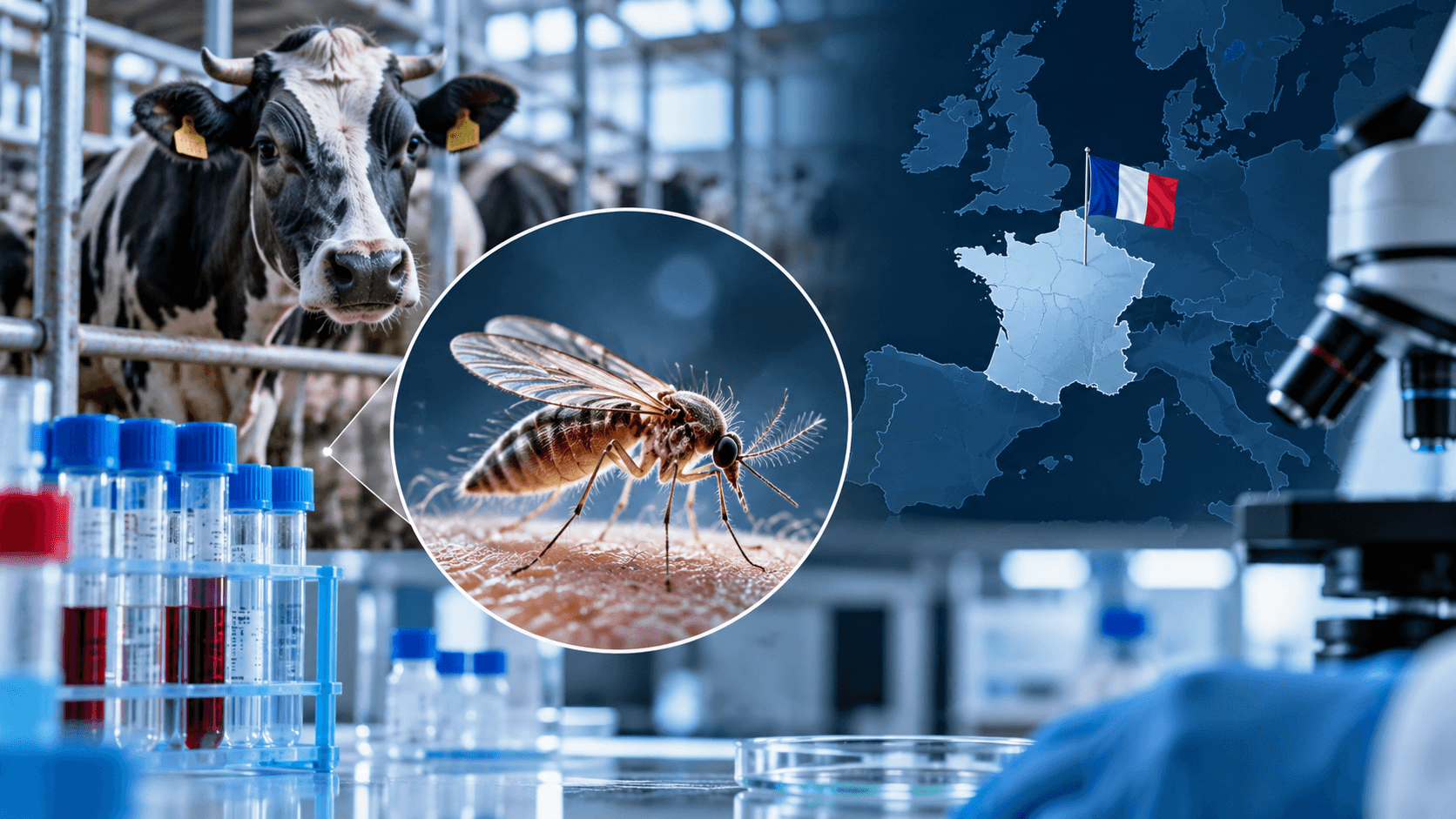
Shamonda Virus: First Human Case in France Raises Health Questions
France has reported the first documented human infection with Shamonda virus, a pathogen previously known primarily for affecting livestock. The case has attracted international attention because the patient died after being treated for a serious underlying illness.
French authorities are investigating how the infection occurred and whether the virus caused or contributed to the patient’s death. The European Centre for Disease Prevention and Control (ECDC) is monitoring the situation alongside French authorities and other European partners.
Health officials have not identified a risk to the general population based on current information. No human-to-human transmission has been reported.
What Is the Shamonda Virus?
Shamonda virus is an insect-borne virus belonging to the Orthobunyavirus genus and the Simbu serogroup. It was first isolated from cattle in Nigeria in 1965 and has subsequently been identified in parts of Africa and Asia.
The virus is primarily associated with livestock, particularly cattle. Infections or detections have also been reported in sheep, goats, horses and alpacas.
The virus is generally transmitted between susceptible animals through the bites of infected Culicoides midges, tiny blood-feeding insects. It is not the same as influenza, COVID-19 or other commonly discussed human respiratory viruses.
The recent European detections have prompted additional investigation into the virus’s distribution, its effects on animals and its potential implications for human health.
What Happened in the First Reported Human Case?
According to the ECDC, French authorities announced the first reported human infection with Shamonda virus in October 2026.
The patient was receiving treatment in Lyon for a serious underlying illness and had a severely weakened immune system. The patient died in early October.
Authorities are investigating the circumstances of the infection and whether Shamonda virus caused or contributed to the death. French investigators consider the patient’s neurological complications likely to have been associated with the infection, but the full circumstances remain under investigation.
The patient’s serious underlying condition is an important part of the case. A single infection in a medically vulnerable person does not establish how the virus would affect a healthy individual.
Can Shamonda Virus Spread to Humans?
The French case demonstrates that human infection has been documented. However, scientists still have limited information about how frequently such infections may occur, what determines their severity and whether other people could be susceptible.
French authorities suspect that the patient acquired the infection through a bite from an infected midge in eastern France, where the virus had been circulating among livestock.
The precise transmission route in this case remains under investigation.
There is currently no reported evidence of human-to-human transmission. The case does not establish that the virus can spread efficiently between people.
The World Health Organization has indicated, based on available information and knowledge of related viruses, that this appears to be an isolated case with a low likelihood of wider spread at present.
What Are the Symptoms of Shamonda Virus?
In animals, reported signs of Shamonda virus infection include:
Fever and lethargy.
Diarrhoea.
Reduced milk production in cattle.
Reproductive complications, including abortions.
Foetal abnormalities in some affected livestock.
Neurological problems reported less commonly in certain animals.
These are signs associated with animal infections and should not be presented as established symptoms of human Shamonda virus disease.
Because this is the first documented human case, the available clinical evidence is extremely limited. Researchers do not yet have enough confirmed human cases to establish a reliable pattern of symptoms, severity or long-term outcomes.
A suspected human infection would require appropriate clinical assessment and laboratory investigation.
Why Is Europe Monitoring the Virus?
Shamonda-like viruses were detected in European livestock during 2026, with reports from multiple countries.
By October, detections had been reported in countries including France, Germany, Spain, Ireland, Italy, Belgium and the Netherlands, among others. The exact distribution and scale of infection remain uncertain because surveillance and laboratory reporting vary between countries.
The appearance of the virus in European livestock has raised questions about its movement, the role of biting midges and the possible impact on cattle and other susceptible animals.
The first documented human infection has added a public-health dimension to an outbreak that was previously monitored primarily as an animal-health issue.
The ECDC is working with national authorities and European partners to strengthen testing and investigate the implications of the case.
Is Shamonda Virus a New Pandemic Threat?
The first human infection is an important finding for disease surveillance, but it is not evidence that a pandemic is beginning.
Public-health risk depends on several factors, including whether the virus can spread between people, how efficiently it transmits, the severity of illness across different populations and the availability of effective prevention and treatment.
At present, no human-to-human transmission has been reported, and authorities have not identified a general-population health risk.
Researchers still need to establish why the infection occurred, whether other human infections have gone undetected and how the virus behaves in different hosts.
It is therefore important to follow verified updates from health authorities rather than drawing conclusions from a single case.
Is There a Vaccine or Specific Treatment?
According to the World Organisation for Animal Health (WOAH), there is currently no commercially available vaccine against Shamonda virus for livestock.
The evidence on human infection is too limited to establish a specific treatment protocol. The management of a human case would depend on the patient’s condition and the clinical complications involved.
People should not use veterinary treatments or unproven medicines to prevent or treat a suspected human infection.
Farmers and veterinary professionals should follow local animal-health guidance and seek laboratory testing when livestock show unexplained illness or reproductive problems.
How Can the Risk Be Reduced?
Because the virus is understood to spread primarily through biting midges, animal-health measures focus on reducing exposure to these insects and monitoring suspected infections.
Measures may include suitable insect barriers, management of potential breeding sites, vector surveillance and following veterinary guidance on animal movement.
For the general public, there is currently no evidence supporting special emergency measures beyond routine precautions against biting insects and compliance with advice from local public-health authorities.
Anyone concerned about a possible infection should seek advice from a qualified healthcare professional rather than attempting self-diagnosis.
What Happens Next?
French authorities and European public-health partners are investigating the reported human case and its possible implications. Further testing and surveillance may clarify how the patient became infected, whether the virus contributed to the death and whether any additional human infections have occurred.
Veterinary authorities are also monitoring the virus in livestock because of its potential effects on milk production and animal reproduction.
For now, the key distinction is between a newly documented human infection and evidence of sustained human transmission. The first has been reported; the second has not.
The bottom line: Shamonda virus is primarily a livestock-associated virus transmitted by biting midges. France’s first documented human case is significant for scientific surveillance, but current evidence does not indicate widespread human transmission or an identified risk to the general population.