France Protests Turn Violent: Why Thousands Are Taking to the Streets
France is facing one of its most serious waves of civil unrest in recent years, as demonstrations over rising living costs and deteriorating public services have escalated into clashes, looting and damage to public buildings.
The protests brought together students, workers, trade union members and people frustrated by increasing household expenses. What began with demands for better conditions in public schools has developed into a wider movement expressing anger over fuel prices, wages and the cost of everyday life.
Violence during demonstrations over the weekend of October 17–18, 2026, has added to the pressure on President Emmanuel Macron’s government, which is attempting to restore order while responding to protesters’ concerns.
Why Are People Protesting in France?
The demonstrations have several overlapping causes.
1. Rising Cost of Living
Many protesters say their incomes are struggling to keep pace with the rising cost of food, transport, fuel and other essentials. Higher energy costs have added to household and business pressures.
For workers on modest incomes, increases in everyday expenses can leave less money available for rent, bills and other necessities.
The cost-of-living issue has also brought together groups with different political views, including supporters of France’s earlier Yellow Vest movement, which emerged in 2018 over fuel taxes and purchasing power.
2. Poor Conditions in Public Schools
Student demonstrations began in September at Lycée Saint-Exupéry in Créteil, a suburb southeast of Paris.
Students raised concerns about teacher shortages, overcrowded classrooms, inadequate facilities and the quality of public education. The demonstrations subsequently spread to other cities, with school blockades and wider student mobilisation.
Teachers and families have also raised concerns about unfilled staff positions and disrupted learning.
The education protests became a major part of the broader demonstrations when other groups joined students in demanding improvements to public services.
3. Fuel Prices and Wages
Higher fuel costs have become another major source of public frustration. Transport workers, motorists and businesses that depend on fuel have faced additional financial pressure.
Trade unions have backed demands for lower prices, better wages and stronger public services. These economic concerns have helped expand the demonstrations beyond students and their immediate concerns.
How Large Were the France Protests?
Hundreds of thousands of people took part in demonstrations across France on Saturday, October 17.
According to reporting by Le Monde, organisers estimated attendance at approximately 800,000, while France’s Interior Ministry put the figure at around 550,000.
The difference reflects competing estimates of participation, but both figures indicate a substantial nationwide mobilisation.
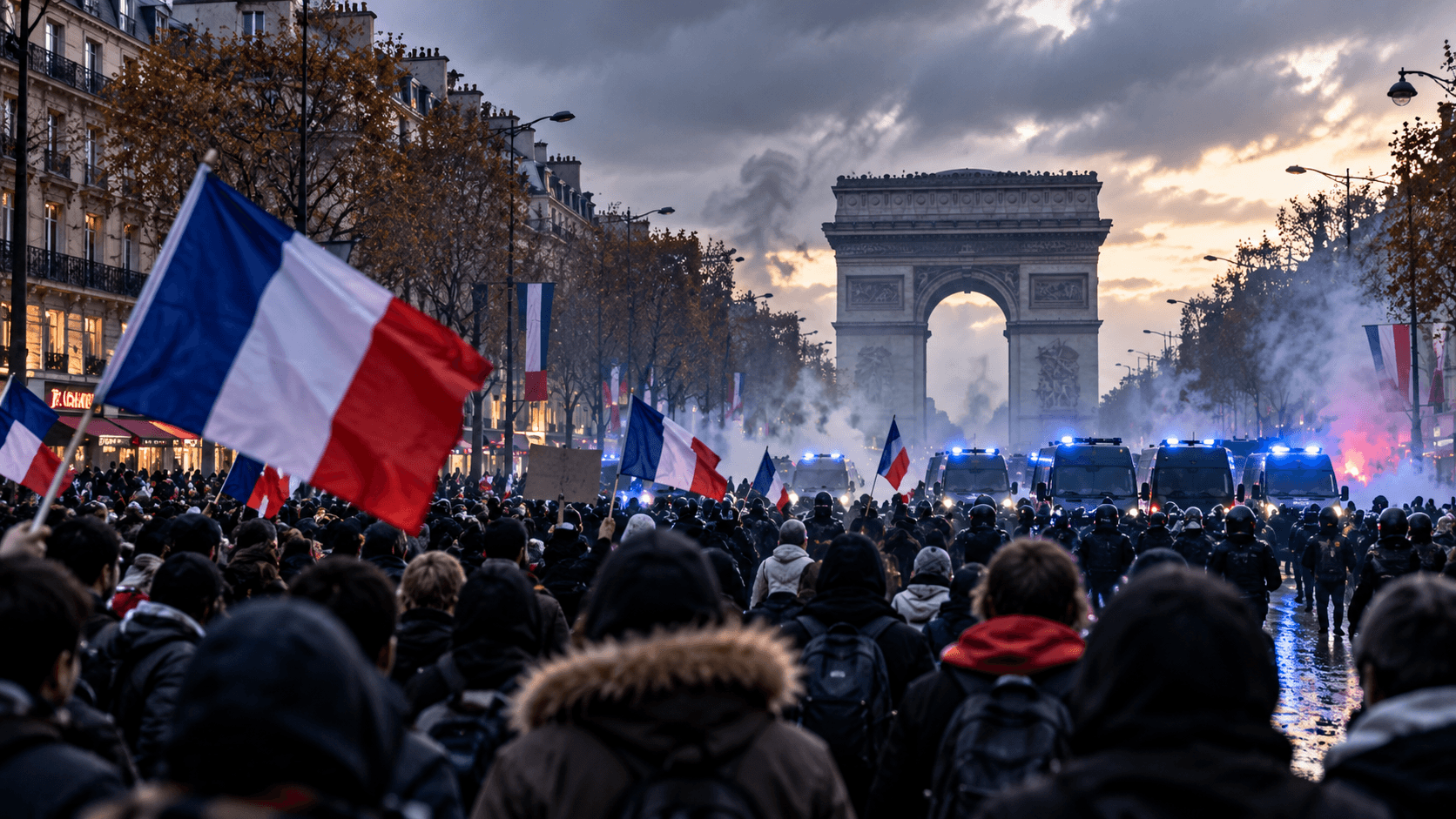
Demonstrations took place in Paris and cities including Lyon, Marseille, Bordeaux, Nantes and Limoges. Many people marched peacefully, although some gatherings were disrupted by confrontations and property damage.
How Did the Protests Turn Violent?
During the weekend, groups of rioters clashed with police, damaged shops and set fires. Public buildings were also targeted, and a historic town hall in Limoges was badly damaged by fire.
Authorities reported widespread arrests and damage to businesses. Reuters reported on October 19 that approximately 2,400 people had been arrested over the weekend, while thousands of businesses were reportedly damaged or looted.
The violence overshadowed the peaceful demonstrations and prompted renewed questions about public order and police preparedness.
It is important to distinguish between the larger body of demonstrators who participated in peaceful marches and the individuals involved in violence or looting. Participation in a protest does not, by itself, establish responsibility for criminal acts.
What Is Emmanuel Macron’s Government Doing?
The French government has faced pressure to address both the unrest and the underlying grievances.
President Emmanuel Macron condemned the violence and called for those responsible for destruction and looting to be held accountable. Authorities have also pursued additional security measures and considered localised curfews in affected areas.
Prime Minister Sébastien Lecornu has called for targeted measures to restore public order. Police and investigators are examining evidence connected with the weekend’s incidents.
At the same time, the government has announced steps related to education staffing and costs. Reporting by The Guardian on October 19 said the government had promised additional substitute teachers and abandoned plans to increase certain university registration fees.
Whether these measures will ease public frustration remains uncertain.
Why Are the Protests Becoming a Political Challenge?
The demonstrations have united people with different priorities, including students seeking better schools, workers concerned about wages and households struggling with higher expenses.
That broad coalition creates a challenge for the government: restoring public order alone may not resolve the concerns that initially brought people onto the streets.
The unrest is also unfolding ahead of France’s 2027 presidential election, making economic pressures, public services and government accountability increasingly prominent political issues.
Opposition politicians have criticised the government’s handling of the crisis, while officials have emphasised the need to distinguish peaceful protest from violence and criminal damage.
These competing responses reflect a wider debate about public spending, policing and the future direction of French politics.
What Happens Next?
The immediate outlook depends on whether demonstrations continue, whether further violence occurs and how effectively the government responds to demands concerning schools and living costs.
Local authorities may maintain additional security measures in areas affected by unrest. Police investigations into looting and property damage are also expected to continue.
For the government, the challenge is twofold: protect public safety and address the economic and public-service concerns driving the demonstrations.
The key takeaway: France’s protests are not about a single issue. Rising living costs, fuel prices and frustration over public education have converged into a broader movement. The scale of the demonstrations and the violence surrounding some events have made the crisis a major national issue.
N13K Blogs will update this report as verified developments emerge.