BJP vs CJP: Why India’s Voter-List Controversy Has Sparked Nationwide Protests
The confrontation between the Bharatiya Janata Party (BJP) and the youth-led Cockroach Janta Party (CJP) has become a prominent political controversy in India, driven by disputes over electoral-roll revisions, the independence of the Election Commission and the handling of public protests.
On October 12, 2026, opposition leaders and demonstrators marched towards the Supreme Court in New Delhi, demanding the resignation of Chief Election Commissioner Gyanesh Kumar. The demonstration followed two days of CJP-led protests that resulted in widespread detentions and restrictions on movement in the capital.
The BJP and Election Commission have rejected allegations that voter-list changes were intended to benefit the ruling party. Protest organisers and opposition leaders maintain that the revision process raises serious concerns about voter eligibility and electoral fairness.
What Is the BJP vs CJP Controversy?
At the centre of the dispute is India's electoral-roll revision process, which involves reviewing voter registrations and removing entries considered invalid.
CJP and opposition groups argue that the process risks excluding legitimate voters, particularly people who may struggle to establish their eligibility under the revised procedures.
The BJP maintains that the exercise is necessary to improve the accuracy of electoral rolls by removing duplicate registrations and entries belonging to deceased or otherwise ineligible people.
The Election Commission has denied allegations of political bias and said eligible voters whose names were removed can seek re-enrolment.
These positions represent competing claims. The existence of large-scale voter-list changes does not, by itself, establish that electoral fraud or politically motivated voter suppression occurred.
BJP vs CJP: What Each Side Is Saying
Issue
CJP and opposition position
BJP / Election Commission position
Electoral-roll revision
Raises concerns about exclusion of eligible voters
Intended to remove invalid entries
Gyanesh Kumar
CJP demands his resignation
Election Commission rejects allegations of wrongdoing
October protests
Organisers describe them as peaceful democratic demonstrations
Authorities cite public-order and permission requirements
Political allegations
Critics say revisions could benefit BJP
BJP rejects claims of political manipulation
The distinction between the BJP's political response and the Election Commission's official position matters: they are separate institutions, even where their responses to allegations overlap.
October 10–11: How the CJP Protests Escalated
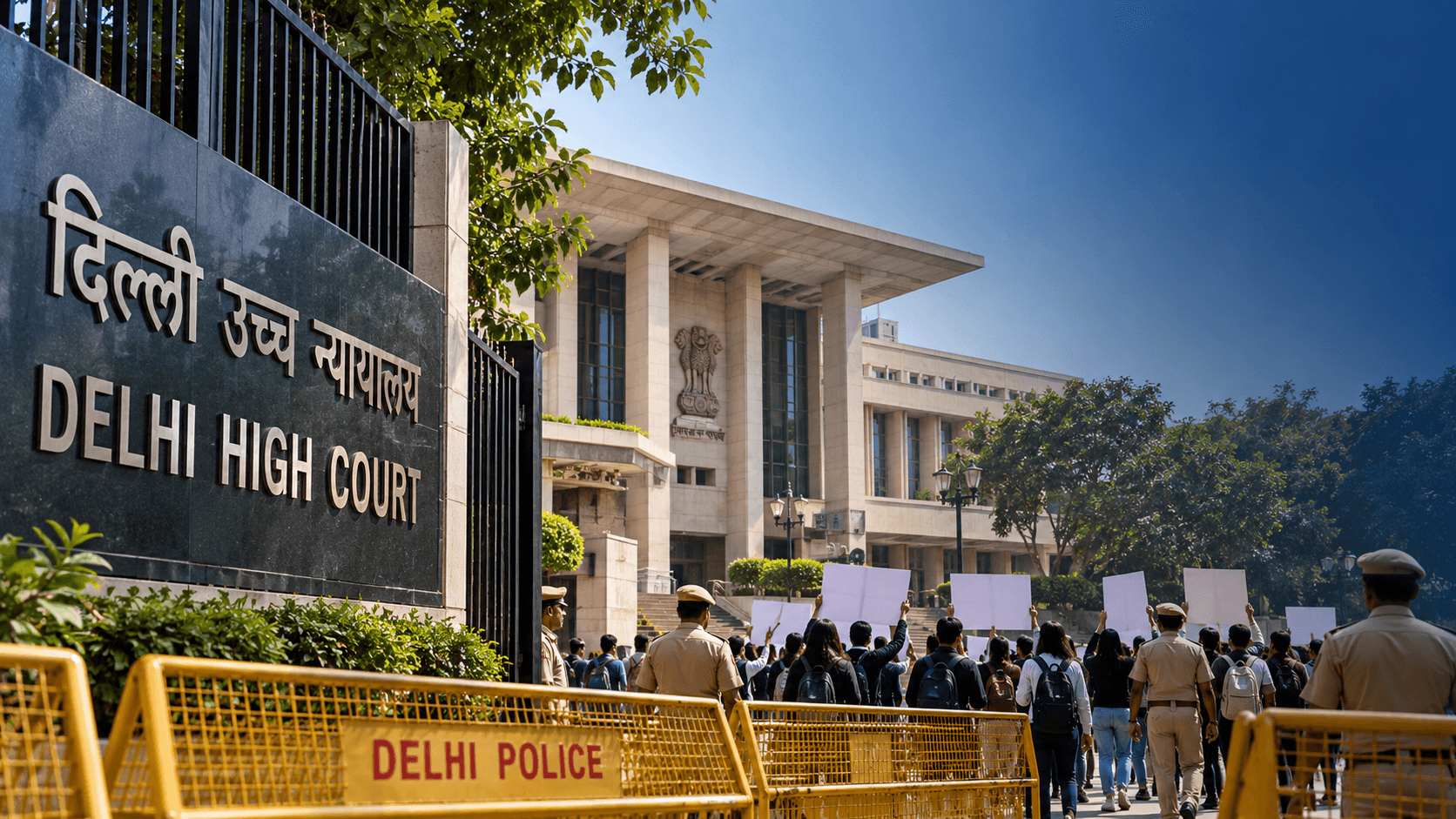
CJP and student organisations organised demonstrations in Delhi on October 10, calling for electoral reforms and Gyanesh Kumar's resignation.
Police deployed extensive security arrangements, including barricades and transport restrictions. Authorities said the planned Jantar Mantar gathering lacked the required permission.
Thousands of protesters were reportedly detained during the weekend. CJP leaders, including Abhijeet Dipke, Saurav Das and Ashutosh Ranka, were also detained and subsequently released.
Protests continued on October 11. CJP representatives said they intended to continue their campaign and seek permission for another peaceful demonstration.
The detentions brought additional attention to the question of how public-order restrictions should be balanced with the right to peaceful assembly.
October 12: Opposition Marches Towards the Supreme Court
The dispute intensified on Monday, October 12, when opposition parties and supporters of the CJP movement joined a march towards the Supreme Court.
Rahul Gandhi and other opposition figures called for action over alleged electoral-roll irregularities and demanded accountability from election authorities.
Security measures disrupted movement across parts of Delhi, including closures of several metro stations and traffic restrictions.
Reuters reported that Chief Justice Surya Kant did not meet the opposition delegation and advised the leaders to pursue their concerns through a formal petition.
The march represented a further escalation of the controversy, bringing opposition political parties and youth-led activists into a wider public campaign.
How Did the Cockroach Janta Party Become a Political Movement?
CJP emerged as a youth-led movement associated with online satire and criticism of government policies. It subsequently attracted attention through protests and campaigns involving students and other activists.
Its recent activities have focused on the electoral-roll controversy and demands for changes in election administration.
Although the name includes the word “Party,” CJP should not automatically be treated as an established electoral party equivalent to the BJP. Its current public prominence is primarily associated with activism and demonstrations.
This difference is important when describing the dispute as “BJP vs CJP”: it is a confrontation between the ruling political party and a protest movement, rather than necessarily a contest between two comparable electoral organisations.
Why Is Gyanesh Kumar at the Centre of the Dispute?
As Chief Election Commissioner, Gyanesh Kumar has become the focus of criticism over the electoral-roll revision process.
CJP and opposition leaders have demanded his resignation, alleging that the Election Commission has failed to maintain sufficient independence and fairness.
The Election Commission denies wrongdoing. Questions about the legality, accuracy and implementation of voter-list revisions would need to be assessed through official records, applicable procedures and any judicial findings.
The political demand for a resignation is therefore distinct from a legally established finding of misconduct.
What Could Happen Next?
CJP leaders have indicated that their protests will continue. They have also sought a new date for an authorised demonstration in Delhi.
The next developments to watch include the response from Delhi Police, any formal legal challenges, statements from the Election Commission and whether opposition parties organise additional demonstrations.
The controversy may remain politically significant because it combines questions about voter registration, democratic participation and freedom of assembly.
For now, the BJP and CJP remain sharply divided over the purpose and impact of electoral-roll revisions, while the allegations of deliberate political manipulation remain disputed.
Key Takeaways
CJP and opposition groups are challenging India's electoral-roll revision process.
The BJP and Election Commission reject allegations of politically motivated voter removals.
CJP-led protests on October 10–11 resulted in widespread detentions.
Opposition demonstrators marched towards the Supreme Court on October 12.
CJP continues to demand Gyanesh Kumar's resignation.
The dispute remains unresolved, and allegations should not be presented as proven findings.